

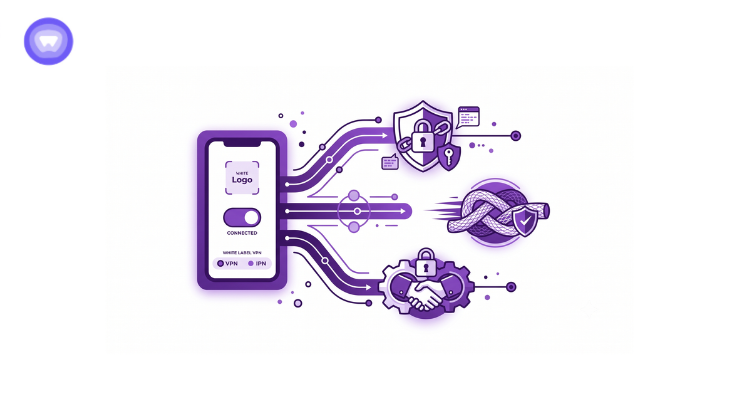
- Business Decision: Protocol choice is a business decision, not just an engineering detail. It sets the ceiling on a partner’s support costs and patch liability from month one.
- Real Exposure: Unmanaged protocols create real financial exposure. Edge device and VPN exploitation jumped from 3 percent to 22 percent of initial access cases in a single year.
- Patch Ownership: Patch ownership decides enterprise deal outcomes. Partners on a managed, centrally patched platform can answer vendor security reviews with confidence instead of losing the deal before the demo.
- Post Quantum Readiness: Post quantum readiness is a genuine differentiator few competitors address. A partner on a platform built for cryptographic agility inherits future upgrades automatically, with no app resubmission or client disruption.
- App Store Approval: Protocol implementation affects app store approval odds. An embedded SDK with an already approved protocol history clears review faster than a standalone app built from scratch.
A white label VPN partner rarely thinks about protocols on day one. Branding gets chosen first. Pricing comes next. Only later does anyone ask which stack sits underneath the app icon. That order works against the partner. White label VPN protocols set the ceiling on speed and support cost. They also decide how a business survives its first vulnerability disclosure once the app goes live.
This is not another speed comparison chart. Every provider already publishes one of those. The real gap is what protocol choice does to a partner’s support load and patch liability. It also decides market reach once real clients start calling with real problems. That gap is where white label VPN protocols stop being an engineering detail and start being a business decision.
What Not Knowing This Costs a Partner
Protocol choice looks like an engineering detail from the outside. For the business signing the reseller agreement, it is a cost center from month one.
Edge device and VPN related exploitation jumped sharply in a single year. It went from 3 percent to 22 percent of initial access cases, according to a recent vulnerability report. That growth sits inside the protocol and gateway layer every partner inherits. It does not matter whether the partner built that layer or licensed it.
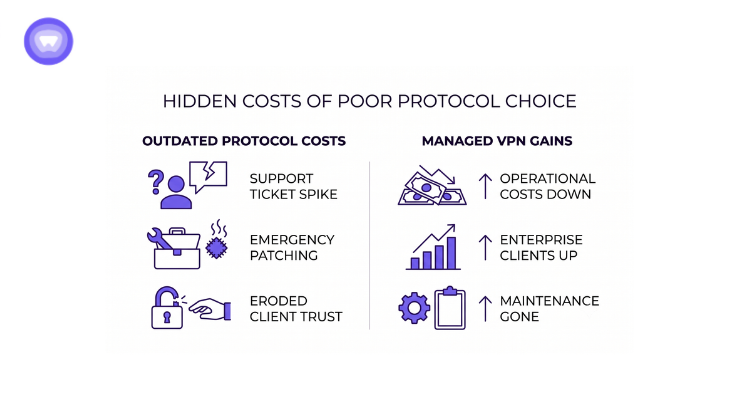
A partner running an outdated protocol stack absorbs three costs. Each one surfaces the moment a flaw is disclosed:
- Support tickets spike as connections drop or apps flag security warnings
- Engineering hours shift into emergency patching instead of growth work
- Client trust erodes fast, since a VPN brand selling security cannot afford a breach headline
None of this shows up on a feature comparison page. It shows up on a support dashboard three months after launch.
A verified client case study tells the other side of this story. An MSP bundled antivirus with a managed VPN suite. Operational costs dropped 32 percent. Enterprise clientele grew 20 percent in the same window. Most of that saving came from removing protocol and infrastructure maintenance from the partner’s own task list.
What a VPN Protocol Actually Controls
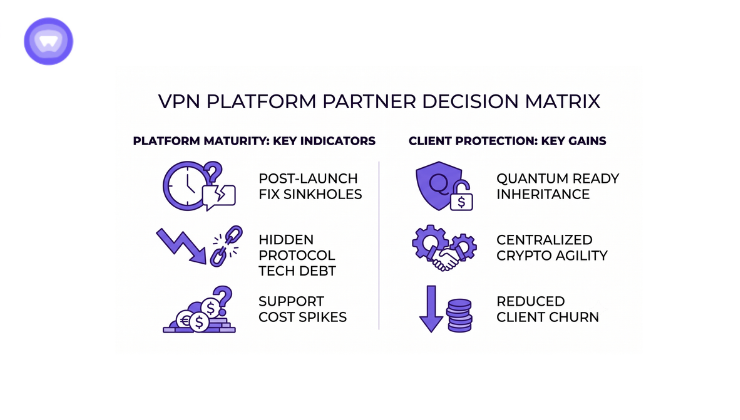
A protocol defines how a device and a server build an encrypted tunnel. It governs how keys get exchanged and how the connection survives a network change. It is the rulebook for every packet moving through the app.
Four protocols make up most white label VPN protocols in commercial use right now: OpenVPN, WireGuard, IKEv2, and IPsec. Each trades speed, compatibility, and processing load differently. OpenVPN favors broad device support. WireGuard favors raw speed and lean code. IKEv2 favors mobile networks that switch between WiFi and cellular. IPsec favors enterprise and site to site links.
Reviewing which protocol is fastest answers a user’s question. It does not answer a partner’s question. A partner needs to know which protocol mix keeps support costs low. A partner needs to know which mix keeps the business out of legal exposure as it scales. That partner-side framing is where white label VPN protocols deserve more attention than they usually get.
Most partners never build this stack themselves. They license it from a provider and inherit whatever decisions that provider already made. That inheritance is fine when the provider treats protocol maintenance as core infrastructure. It becomes a liability when the provider treats it as an afterthought bolted onto a billing dashboard. Asking which protocols ship by default belongs on the due diligence checklist. So does asking how often those protocols get updated, right alongside pricing and server count.
The Protocol Decision No One Frames as a Partner Decision
Speed and security get most of the attention in protocol content. Three questions matter more once a partner has paying clients and an active support queue.
Support Ticket Load by Protocol Mix
WireGuard reconnects faster than legacy IPsec configurations on unstable mobile networks. It also drops fewer sessions. Fewer drops mean fewer “my VPN keeps disconnecting” tickets landing on a support desk. A partner offering only older protocols is budgeting for a larger support team. That budget line often goes unwritten until the ticket volume forces the issue.
Patch Ownership When a Vulnerability Hits
When a protocol vulnerability is disclosed, someone has to ship a fix before an attacker automates the exploit. Mandiant’s 2026 incident data puts the mean time to exploit at roughly negative seven days, meaning exploitation now routinely starts before a patch even ships. A partner running an unmanaged protocol stack owns that patch window personally. A partner on PureWL’s infrastructure does not. Updates ship silently on the backend, configs are hardened and audited on an ongoing basis, and the platform carries SOC2, GDPR, and zero-log attestations a partner can hand directly into its own enterprise security reviews instead of building that evidence from scratch.
This single fact separates a hobby VPN resale operation from a business ready to sign an enterprise client. Enterprise security questionnaires ask exactly this question during vendor review, often before pricing ever comes up. One MSP running this model reported a real drop in VPN-related support tickets after handing protocol and infrastructure maintenance to the provider, freeing engineering hours for higher-value work instead of chasing edge cases.
A partner who cannot answer confidently loses that deal before the demo even starts. A partner backed by a provider with a documented patch cadence walks into that same review with an answer ready.
Regional Blocking and the Obfuscation Layer
Standard OpenVPN and WireGuard traffic gets fingerprinted and blocked in several major markets today. A 2024 research found 63 new government internet restrictions affected close to 4.8 billion people, up from 4.4 billion the year before.
A partner expanding into Southeast Asia or the Middle East needs an obfuscation layer on top of the base protocol. The same applies to parts of Eastern Europe. The protocol alone is not enough. Building that layer from scratch requires deep packet inspection expertise. Most resellers do not have that expertise in house, and most should not need to build it themselves.
Post-Quantum Readiness: The Question Competitors Are Not Asking
Almost no white label protocol content mentions this angle. It changes the multi-year value of every protocol decision made today.
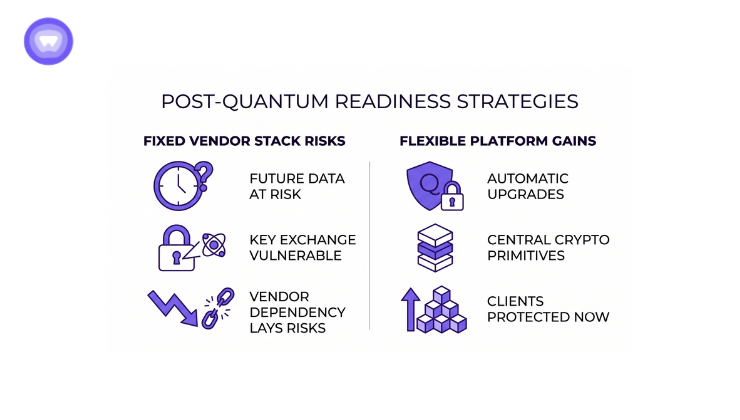
Traffic captured now and stored can be decrypted later, once quantum computing matures enough to break current key exchange methods. Security researchers call this harvest now, decrypt later. Any data with a shelf life measured in years carries this risk. Financial records, health data, and legal correspondence all qualify.
The U.S. National Institute of Standards and Technology finalized its first three quantum resistant standards in August 2024. That milestone closed an eight year evaluation process. It gives protocol vendors a fixed target to build toward. It also gives partners a genuine question to ask any provider pitching a white label VPN deal.
A partner locked into one vendor’s fixed protocol stack has no say in this migration. That partner cannot control when, or whether, the vendor moves toward quantum resistant key exchange. A partner on a platform built to swap cryptographic primitives centrally inherits that upgrade automatically. No app resubmission. No client-facing disruption.
App Store Review and the SDK Question
Protocol choice also decides how an app clears app store review. This detail rarely gets connected to protocol selection in existing content.
1`Following requests from Russia’s regulator Roskomnadzor, Apple removed at least 60 VPN apps from the Russian App Store since July 2024, and 2025 data shows nearly 100 VPN apps now unavailable there altogether. Most of those removals traced back to circumvention functionality built into the client itself. App store reviewers now scrutinize network extension permissions closely. They also scrutinize packet-level access and any behavior resembling traffic obfuscation.
An embedded SDK that inherits a provider’s already-approved protocol implementation carries a lighter review burden. A standalone app assembling its own protocol stack from open source components carries a heavier one. A partner racing toward a launch date feels that difference directly. It can decide whether the app clears review on the first submission or the third.
A separate anonymized case study shows this pattern outside the app store context too. A hardware partner integrating VPN protocol support at the router and API level removed a separate standalone app entirely. Coverage extended to smart TVs and consoles instead, without asking end users to manage protocol settings themselves. The protocol choice stayed invisible to the customer. The business impact did not.
Protocol Comparison From a Partner’s Operating View
The pattern across every row stays consistent. Raw protocol strength matters less than ownership. The real question is who owns the maintenance, the patching, and the obfuscation layer once the app reaches a client.
| Protocol | Support Ticket Load | Patch Ownership Burden | Censorship Resilience | Fits Best For |
| OpenVPN | Moderate | High if self-managed | Moderate, needs obfuscation add-on | Cross-device coverage, established markets |
| WireGuard | Low | High if self-managed | Low without obfuscation layer | Consumer apps, performance-led brands |
| IKEv2 | Low on mobile | Moderate | Low | Mobile-first partners |
| IPsec | Moderate | High, complex configuration | Low | Enterprise and B2B resale |
This table also explains why a single protocol rarely serves every partner well. A telecom brand serving mobile-heavy markets needs a different mix than an MSP selling enterprise site to site access. Matching the protocol mix to the actual client base is where the real margin sits. Defaulting to whatever a provider ships first rarely gets a partner there.
Questions Partners Should Ask Before Signing a Protocol Stack
Generic protocol guides answer user-facing questions. A partner evaluating white label VPN protocols needs a different set of answers. Most comparison content skips these questions entirely.
- Who patches the protocol layer when a vulnerability is disclosed, and what turnaround does the contract guarantee
- What happens to a client’s app in a market that blocks every standard protocol signature
- Does the licensed protocol implementation already carry app store approval history, or does that review start from zero
These questions rarely appear in protocol content because most of it gets written for end users choosing a personal VPN. A partner is not choosing a personal VPN. A partner is licensing an infrastructure layer it will operate for years.
A provider unwilling to give a direct answer to any of these three questions is signaling something. It is signaling that protocol maintenance was never built as a first class part of the offering. That gap tends to surface later, often during a renewal conversation with an unhappy client. It rarely surfaces during the sales call, where it belongs.
Where PureWL Fits
PureWL White Label VPN Solution gives partners access to OpenVPN, WireGuard, and IKEv2. That access sits inside infrastructure already patched and already obfuscation-capable in restricted markets.
On the post-quantum question, PureVPN has already taken a first concrete step: a partnership with quantum computing firm Quantinuum to generate quantum-resistant encryption keys on its OpenVPN protocol. No VPN provider is fully quantum-proof today, and this covers key generation rather than a full cryptographic overhaul, but it gives partners a genuine answer instead of a vague promise when a client asks about the multi-year migration ahead.
Partners brand the front end. The protocol maintenance, patch cycle, and regional resilience stay managed on the back end.
That structure is what let the MSP in the case study above turn savings into growth. A 32 percent drop in operational costs became 25 percent revenue growth within two months. The protocol layer stopped being a maintenance job. It became a business advantage instead.
The Real Decision
White label VPN protocols are not a technical footnote a partner reviews once before launch. They are a recurring cost. They are a recurring liability. They are a recurring reason clients stay or leave.
A partner who treats protocol selection as a branding afterthought inherits every patch cycle alone. That partner also inherits every blocked region and every app store rejection without support. A partner who treats white label VPN protocols as a business decision builds something sturdier. That service scales without the support desk growing faster than the revenue.