

- Infrastructure, Not Features: The future of white label VPN platforms is an infrastructure liability question, not a features race, deciding who absorbs mandatory changes as they hit.
- 2030 Deadline: NIST requires RSA and Elliptic Curve Cryptography deprecated by 2030 and disallowed by 2035, forcing every VPN protocol stack onto that timeline.
- Readiness Gap: 48% of organizations are not prepared for the required cryptography migration, rising to 56% among mid sized organizations.
- Zero Trust Absorption: The Zero Trust Network Access market is growing at 25.5% annually through 2030, meaning VPN access increasingly needs to plug into identity verification, not stand alone.
- Build vs Buy: A custom built VPN stack leaves the reseller owning every migration cost directly, while an infrastructure backed white label platform delivers those changes as routine updates.
Quick Answer: The future of white label VPN platforms depends on which party, the provider or the reseller, absorbs mandatory infrastructure changes. Two forces are converging on a fixed timeline: a 2030 government deadline to replace current encryption, and Zero Trust architecture absorbing VPN into a larger identity framework. Resellers on a build-it-yourself model inherit both costs directly.
Most articles about the future of VPN technology describe faster protocols and bigger server networks. That framing was accurate five years ago. It misses the actual shift now underway.
The real change is not in what a VPN does. It is in who absorbs the cost when the infrastructure underneath it changes. Encryption standards are being phased out on a fixed government timeline. Zero Trust architecture is pulling VPN access into a larger identity framework. Consumer VPN features are getting bundled into security suites and telecom packages until standalone pricing stops making sense. Each shift hits every VPN reseller at the same time, regardless of size.
The future of white label VPN platforms depends on which side of that cost absorption a reseller sits on. This piece looks at three converging pressures and what they mean for anyone building, buying, or reselling VPN access over the next five years.
Why Generic “Future Of VPN” Predictions Miss The Real Shift
Search for this topic and most results describe the same three things. Faster speeds. Better encryption, described vaguely. New device support. None of that explains why a reseller’s margin could shrink without a single customer complaint reaching support.
The future of white label VPN platforms is not primarily a features story. It is an infrastructure liability story. Three separate technical and market shifts are converging on the same five-year window, and each one forces the underlying protocol stack, compliance posture, or pricing model to change. The question that matters for a reseller is simple. Who does that work, and who pays for it?
| Generic Prediction | What Actually Has A Deadline |
| Encryption will improve | RSA and ECC deprecated by 2030, disallowed by 2035, on a fixed NIST schedule |
| AI will enhance VPN apps | No fixed timeline, no compliance requirement, no cost to a reseller who skips it |
| More devices will support VPN | Not a cost driver; device support is a feature update, not an infrastructure migration |
| VPN and Zero Trust will merge | ZTNA market growing 25.5% annually, with real API and integration requirements now |
The Protocol-Migration Liability No One Is Pricing In
Every VPN connection today depends on public-key cryptography that quantum computers are expected to eventually break. Governments have already set a fixed deadline for replacing it.
The 2030 And 2035 Deadline
The National Institute of Standards and Technology set a firm timeline in November 2024. Classical algorithms including RSA and Elliptic Curve Cryptography must be deprecated by 2030 and disallowed entirely by 2035. This is not a recommendation. It is a phase-out schedule every VPN protocol stack will eventually have to meet.
Readiness has not kept pace with the deadline. A 2025 industry survey found 48% of organizations are not prepared to address quantum cybersecurity threats, with mid-sized organizations trailing further behind at 56% unready. A VPN reseller sits downstream of this gap. If the provider has not started migrating, the reseller inherits that exposure the day the deadline actually bites.
Who Actually Owns The Migration Cost
This is where the future of white label VPN platforms splits into two very different paths.
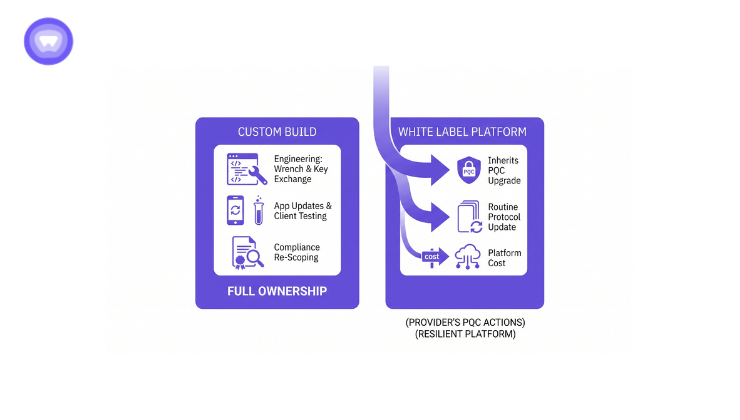
A reseller running a custom-built VPN stack owns the entire migration. That means re-engineering the key exchange, re-testing every client application, and re-certifying any compliance audit that references the old cryptographic scope. None of that work is optional once the 2030 deadline approaches.
A reseller on a white label platform inherits whatever the underlying provider has already done. If the provider moved first, migration shows up as a routine protocol update instead of a multi-quarter engineering project. If the provider has not moved, the reseller is exposed exactly like a custom build, with less visibility into the timeline.
- Ask a prospective provider for the specific quantum-resistant key exchange already in production, not on a roadmap
- Ask whether migration requires an app store resubmission or ships as a silent protocol update
- Ask who bears the cost if a compliance audit needs to be re-scoped after the migration
VPN Access Is Being Absorbed Into Zero Trust Architecture
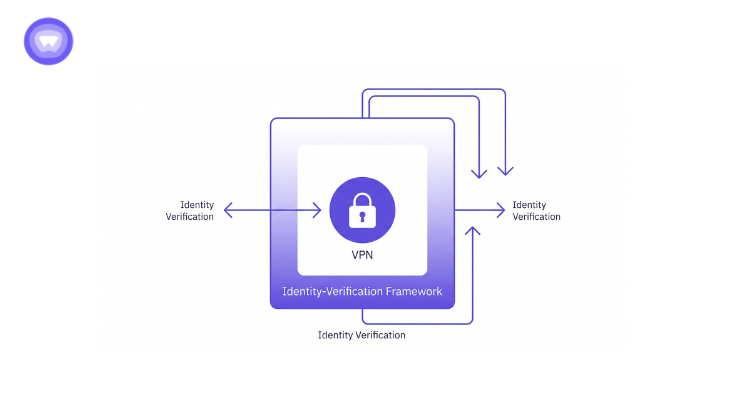
Standalone VPN access is no longer the default way enterprises secure remote connections. It is becoming one component inside a broader identity-verification framework.
What ZTNA Absorption Means For A Reseller’s Roadmap
The Zero Trust Network Access market is projected to grow from $1.34 billion in 2025 to $4.18 billion by 2030, a compound annual growth rate above 25%. That pace outstrips general VPN market growth by a wide margin.
The practical implication is not that VPN disappears. It is that buyers increasingly expect VPN access to plug into continuous identity verification rather than function as a standalone perimeter tool. A white label VPN platform that cannot expose session and device data through an API will look outdated within this window, regardless of encryption strength.
Where VPN Still Wins On Its Own
Zero Trust does not replace every VPN use case. Full-tunnel routing for compliance, geo-restricted content access, and simple network-level encryption for a branded consumer app remain squarely VPN territory. The shift is additive, not a replacement. Product teams and MSPs future-proofing a white label deployment need both capabilities available, not a forced choice between them.
When VPN Becomes A Line Item, Not A Product
Standalone VPN subscriptions face a second pressure that has nothing to do with encryption standards. VPN access is increasingly bundled as a feature inside broader security suites and telecom service tiers rather than sold on its own.
This compresses the price a customer expects to pay for VPN as a discrete line item. A reseller whose entire business model rests on selling VPN access alone is competing against bundles that make VPN feel like a free add-on. A reseller who bundles VPN alongside adjacent services, such as dark web monitoring or data broker removal, is positioned to absorb that pressure instead of being squeezed by it.
Build Vs Buy Under Five-Year Pressure
The three models absorb the same pressures very differently, and the gap only widens as each deadline gets closer.
| Model | Protocol Migration | ZTNA Integration | Bundling Flexibility |
| Custom in-house build | Reseller owns full re-engineering cost | Requires new API development from scratch | Limited by internal engineering bandwidth |
| Basic white label reseller | Depends entirely on provider’s own timeline | Only available if provider exposes it | Fixed to whatever the base package includes |
| Infrastructure-backed white label | Inherited automatically through provider updates | Available where the provider already built it | Modular, add services without rebuilding the stack |
What MSPs Should Ask Before Committing For The Next Five Years
An MSP or MSSP evaluating a white label VPN platform today is not just buying a product. It is choosing who absorbs the next round of infrastructure change on its behalf.
Three questions rarely get asked during a typical vetting call, and all three shape the actual cost of staying current:
- When the underlying protocol migrates to quantum-resistant encryption, does that trigger a new SOC 2 audit scope, and who pays for the re-certification
- Does a protocol-level update require resubmitting the branded app to the Apple App Store and Google Play, or can it ship as a background update
- If a client’s contract renewal happens mid-migration, what specific language in the partner agreement defines who is liable for a gap in coverage
Providers that cannot answer these directly are asking the reseller to carry undefined risk into a renewal cycle.
What The MSP Case Study Shows About Absorbing Change
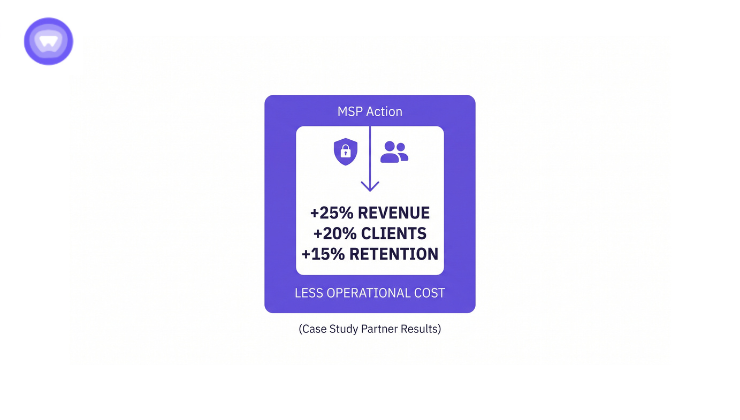
One managed service provider bundled antivirus and VPN into a single line item rather than selling them as separate products. The result was a 25% increase in revenue within two months, alongside a 20% increase in enterprise clientele, a 32% reduction in operational costs, and a 15% increase in client retention, according to a published case study. These figures reflect the partner’s own reported results rather than an independently audited benchmark.
The relevant lesson is not the specific percentages. It is that the MSP did not have to build antivirus or VPN infrastructure from scratch to bundle them. It absorbed both as pre-built components and focused its own resources on the client relationship instead of protocol maintenance.
How PureWL Approaches This
PureWL’s underlying network already supports quantum-resistant key exchange in production, so partners inherit that protocol shift instead of managing a separate migration project. The infrastructure is backed by a SOC 2 Type II audit and a KPMG-verified no-log policy, both maintained centrally rather than left for each partner to certify independently.
Partners provision through an API rather than a fixed feature list, which means Zero Trust integration points and adjacent services like dark web monitoring or data broker removal can be added without a separate build. This is the practical difference between a white label platform that keeps up with infrastructure change and one that leaves a reseller to absorb it alone.
Where This Leaves A Reseller Today
The future of white label VPN platforms will not be decided by which provider adds a feature first. It will be decided by which provider absorbs the mandatory infrastructure changes quietly, and which one passes that cost straight to the reseller during a renewal negotiation.
A protocol deadline set by NIST does not move because a reseller was not ready for it. A Zero Trust integration request from an enterprise buyer does not wait for a roadmap to catch up. The providers and resellers who treat the future of white label VPN platforms as an infrastructure question, not a feature list, are the ones positioned to keep their margins intact through the transition.