

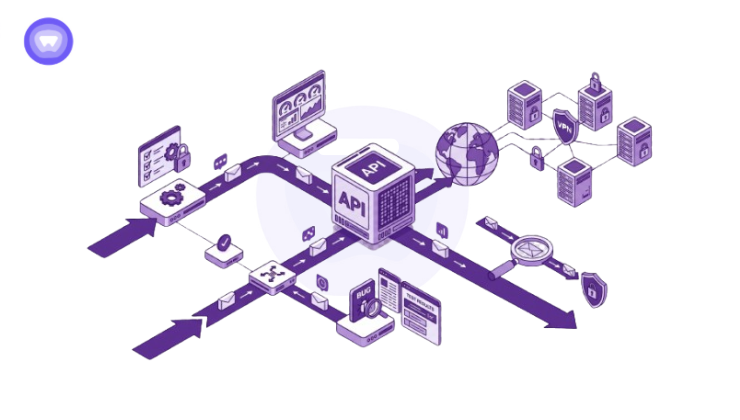
- VPN API testing validates backend systems that handle authentication, provisioning, session management, and server allocation
- VPN platforms depend heavily on APIs for core operations including login, device registration, subscription checks, and routing
- API failures directly impact user experience, causing login errors, disconnects, latency issues, and service instability
- White-label VPN environments increase complexity because multiple brands and configurations rely on shared API infrastructure
- Proper API testing improves security, stability, and scalability by identifying issues before they affect production systems
Most VPN failures happen in backend systems, not encryption protocols. Authentication APIs, session management, provisioning systems, billing validation, and server allocation all depend on stable API communication.
Modern VPN platforms rely heavily on APIs to manage logins, device registration, subscription verification, server switching, and infrastructure automation in real time. When APIs fail, users experience disconnects, login errors, latency issues, failed payments, and service instability.
VPN API testing verifies that these backend systems remain secure, stable, and responsive under real operational conditions. For VPN providers, white-label VPN platforms, and enterprise VPN environments, API testing is now a core part of maintaining service reliability and security.
What Is VPN API Testing?
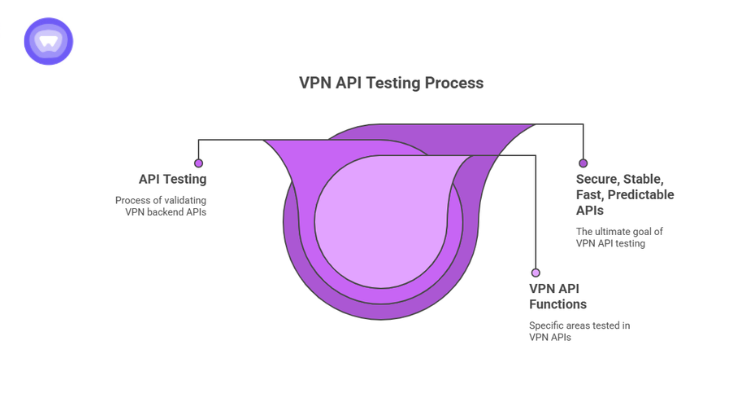
VPN API testing is the process of validating how the backend APIs of a VPN platform behave under normal, high-load, and malicious conditions.
Instead of testing only the VPN client interface, API testing focuses on the systems handling:
- Authentication
- User provisioning
- Device registration
- Session management
- Subscription verification
- Server assignment
- Location switching
- Traffic routing logic
- Admin dashboard actions
- Usage analytics
- Kill switch triggers
- DNS handling
- Billing integration
The goal is simple: verify that APIs remain secure, stable, fast, and predictable across all operational conditions.
A VPN application may look polished on the surface while critical APIs fail silently in the background. That disconnect creates operational instability and major security exposure.
Why VPN APIs Matter More Than Ever
VPN infrastructure has shifted heavily toward API-driven architecture.
Traditional monolithic VPN systems handled most operations internally. Modern VPN platforms rely on distributed cloud services, automation frameworks, microservices, and third-party integrations.
Industry research shows APIs now account for more than half of dynamic internet traffic globally. APIs have effectively become the operational control layer for modern digital services.
VPN providers use APIs for:
| VPN Function | API Dependency |
| User login | Authentication APIs |
| Device activation | Provisioning APIs |
| Server switching | Location-routing APIs |
| Subscription validation | Billing APIs |
| Team management | Admin APIs |
| Dedicated IP assignment | Infrastructure APIs |
| Usage reporting | Analytics APIs |
| Security enforcement | Policy APIs |
Without stable APIs, VPN services become unreliable very quickly.
The Main Goals of VPN API Testing
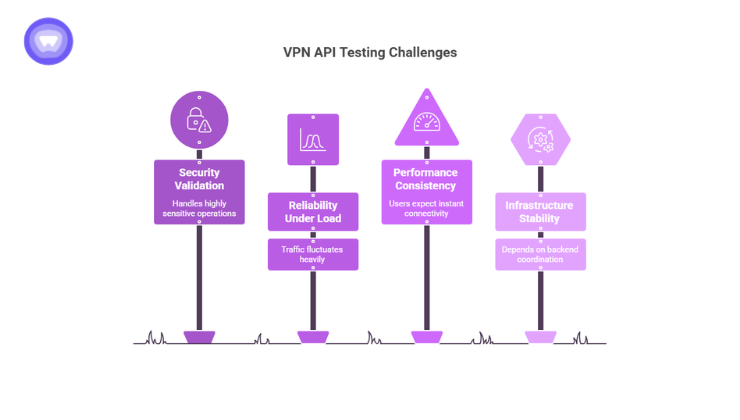
VPN API testing focuses on four critical areas:
1. Security Validation
VPN APIs handle highly sensitive operations.
Testing verifies:
- Authentication controls
- Token expiration handling
- Encryption enforcement
- Session integrity
- Access permissions
- API key protection
- Injection vulnerability resistance
- Rate-limiting enforcement
API security failures often expose the entire VPN environment.
Broken authentication and excessive data exposure remain among the most common API vulnerabilities affecting cloud platforms and SaaS systems.
2. Reliability Under Load
VPN traffic fluctuates heavily.
A VPN provider may experience:
- Massive login spikes
- Regional traffic surges
- Streaming-related demand peaks
- Infrastructure failovers
- Sudden server migrations
API testing verifies that systems continue operating correctly under stress.
This includes:
- Concurrent session handling
- Load balancing validation
- Session recovery testing
- Failover testing
- Timeout behavior
- Retry handling
3. Performance Consistency
Users expect instant connectivity.
Slow APIs increase:
- Login delays
- Connection timeouts
- Dashboard failures
- Subscription verification errors
- Session instability
Performance testing measures:
- API response times
- Request throughput
- Latency under load
- Geographic consistency
- Database query efficiency
4. Infrastructure Stability
VPN systems depend on backend coordination.
API testing validates:
- Server orchestration
- Configuration synchronization
- Logging consistency
- DNS behavior
- Infrastructure automation
- Cross-region deployment stability
Without testing, infrastructure issues often appear only after production failures.
Common VPN APIs That Require Testing
Not every API carries the same operational risk.
Some APIs directly affect security and service availability.
Authentication APIs
These APIs validate user credentials and issue session tokens.
Testing checks:
- Multi-factor authentication behavior
- Token expiration
- Brute-force protection
- Session hijacking resistance
- Device limit enforcement
Authentication failures are among the most damaging VPN issues because they directly affect account security.
Provisioning APIs
Provisioning APIs manage:
- User creation
- Device onboarding
- Team member assignment
- Dedicated IP allocation
- Server access permissions
Improper provisioning logic creates access control problems very quickly.
Session Management APIs
These APIs control:
- Active connections
- Session persistence
- Device switching
- Connection recovery
- Concurrent session limits
Weak session handling creates instability and increases security risks.
Billing and Subscription APIs
VPN services often rely on automated subscription systems.
Testing verifies:
- Plan activation
- Renewal handling
- Payment synchronization
- Access expiration
- Refund processing
Billing API failures directly impact revenue and customer trust.
Infrastructure APIs
Infrastructure APIs control backend VPN operations such as:
- Server deployment
- Region activation
- Routing configuration
- Dedicated IP mapping
- Traffic allocation
These APIs affect operational uptime at scale.
Types of VPN API Testing
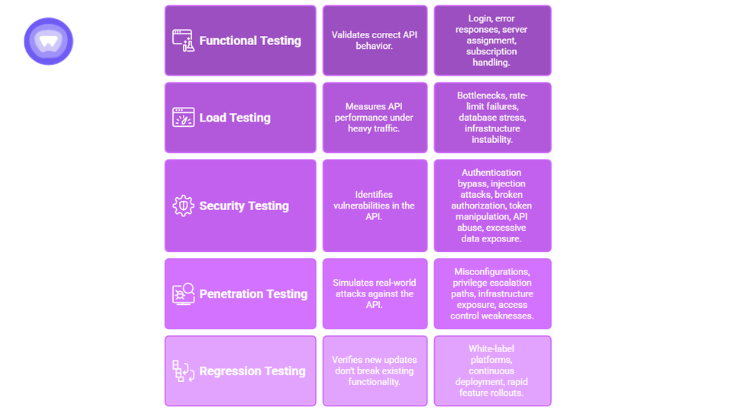
Effective VPN API testing usually combines multiple testing methods.
Functional Testing
Validates whether APIs behave correctly.
Examples:
- Successful login requests
- Proper error responses
- Correct server assignment
- Valid subscription handling
Load Testing
Measures API behavior under heavy traffic.
This identifies:
- Performance bottlenecks
- Rate-limit failures
- Database stress points
- Infrastructure instability
API traffic attacks and abuse patterns continue increasing as more services shift toward cloud-based architectures.
Security Testing
Focuses on identifying vulnerabilities.
Testing targets:
- Authentication bypass attempts
- Injection attacks
- Broken authorization
- Token manipulation
- API abuse
- Excessive data exposure
Penetration Testing
Simulates real-world attacks against VPN APIs.
This helps identify:
- Misconfigurations
- Privilege escalation paths
- Infrastructure exposure
- Access control weaknesses
Regression Testing
Verifies that new updates do not break existing API functionality.
This becomes critical for:
- White-label VPN platforms
- Continuous deployment environments
- Rapid feature rollouts
Why VPN API Testing Is Important for White-Label VPN Providers
White-label VPN providers operate on shared infrastructure that supports multiple brands, regions, customer environments, pricing models, and custom applications. This creates a highly distributed system where provisioning, authentication, and configuration logic all depend on interconnected APIs.
Because of this complexity, API failures can impact multiple branded VPN services at once, including dashboards, Dedicated IP deployments, subscription systems, and authentication flows. Strong API testing helps detect and isolate issues before they reach partners or end users.
The Business Risks of Poor VPN API Testing
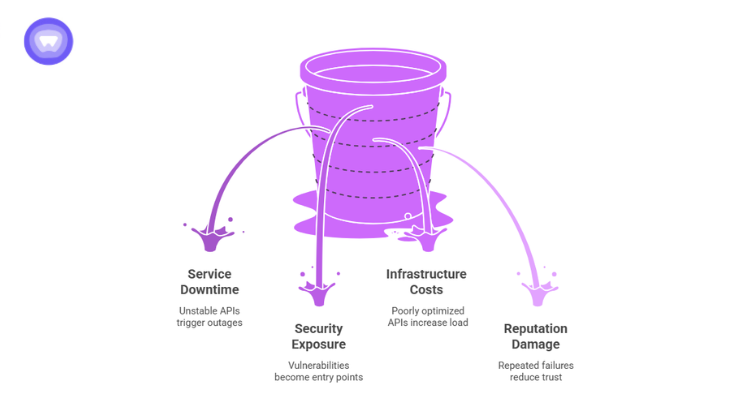
Weak API testing creates operational and financial damage very quickly.
Service Downtime
Unstable APIs can trigger:
- Login outages
- Server assignment failures
- Session drops
- Dashboard instability
Even short outages damage user trust.
Security Exposure
API vulnerabilities frequently become entry points for attackers.
According to the IBM Cost of a Data Breach Report, credential compromise and cloud misconfigurations remain among the most expensive security incident categories globally.
For VPN providers, API exposure directly affects:
- User privacy
- Infrastructure security
- Authentication systems
- Payment systems
Infrastructure Costs
Poorly optimized APIs increase:
- Server load
- Database overhead
- Bandwidth consumption
- Scaling inefficiencies
At scale, inefficient API behavior creates major operational costs.
Reputation Damage
VPN users expect stability and privacy.
Repeated failures reduce:
- Customer retention
- Trust
- Enterprise adoption
- Partner confidence
In privacy-focused industries, reputation damage spreads quickly.
Key Metrics Used in VPN API Testing
VPN engineering teams commonly monitor:
| Metric | Why It Matters |
| Response time | Measures API speed |
| Error rate | Identifies instability |
| Throughput | Tracks request capacity |
| Authentication success rate | Validates login reliability |
| Session persistence | Measures connection stability |
| Failover recovery time | Evaluates resilience |
| API uptime | Measures operational consistency |
| Rate-limit accuracy | Prevents abuse |
These metrics help teams identify operational weaknesses before production failures occur.
Best Practices for VPN API Testing
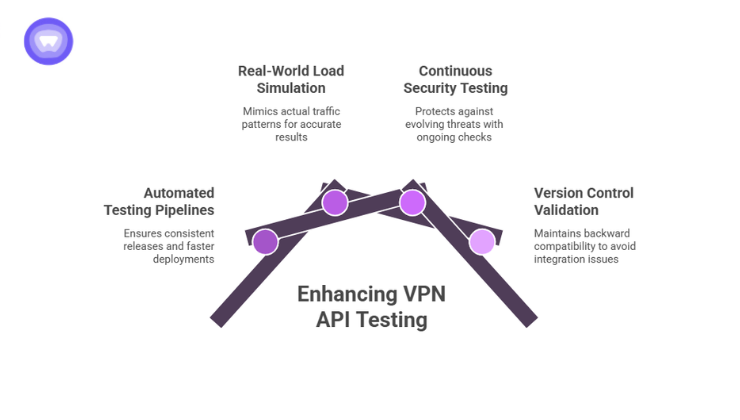
Strong VPN API testing strategies usually include:
Automated Testing Pipelines
Automated testing catches issues during development before deployment.
This improves:
- Release consistency
- Infrastructure reliability
- Deployment speed
Real-World Load Simulation
Testing should reflect actual VPN traffic patterns, including:
- Geographic distribution
- Mobile device switching
- Streaming spikes
- Enterprise usage peaks
Continuous Security Testing
API security testing should run continuously rather than periodically.
Threats evolve quickly, especially for internet-facing infrastructure.
Version Control Validation
API updates should maintain backward compatibility whenever possible.
Breaking integrations creates operational problems for:
- VPN apps
- Enterprise dashboards
- White-label partners
- Automation systems
How PureWL Supports Scalable VPN Infrastructure
As VPN services scale, backend API stability becomes increasingly important. Managing authentication systems, provisioning workflows, infrastructure orchestration, and session management across multiple regions requires consistent testing and operational visibility.
PureWL provides a white-label VPN platform designed for businesses building branded VPN services without maintaining complex infrastructure internally. The platform supports centralized management, scalable deployment environments, dedicated server configurations, and backend operational control that aligns with modern API-driven VPN architecture.
For businesses launching or scaling VPN services, stable APIs directly affect uptime, user experience, infrastructure reliability, and long-term operational efficiency. API testing is no longer limited to engineering optimization. It has become part of maintaining a secure and commercially viable VPN platform.
Final Thoughts
VPN applications operate through thousands of backend interactions every minute. Users may only see a connect button, but behind that action are authentication systems, provisioning logic, routing controls, and infrastructure APIs working continuously in real time.
When those APIs fail, the VPN service fails with them.
That is why VPN API testing matters. It verifies that the systems powering the VPN remain secure, stable, responsive, and scalable under real operational conditions. For VPN providers and white-label platforms alike, API testing has become a core part of maintaining trust, uptime, and long-term service reliability.