

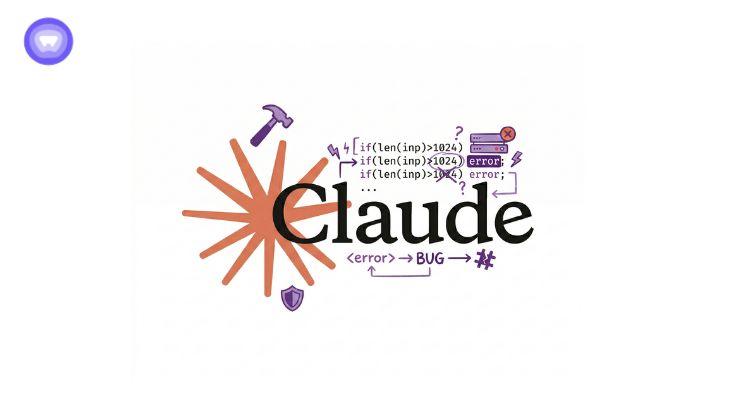
- Silent Remote Execution: Malicious hooks in .claude/settings.json can run commands automatically when a project opens, compromising developer machines.
- Consent Bypass via MCP: Model Context Protocol settings can override user approvals, allowing external integrations to run without permission.
- API Key Exposure: Configuration manipulation can redirect authenticated API requests, stealing sensitive credentials and exposing shared team resources.
- Minimal User Interaction Required: Exploitation occurs simply by opening an untrusted repository, making traditional security assumptions inadequate.
- Expanded Attack Surface: AI automation and configuration files are now active parts of the system’s attack surface, requiring new trust and network control practices.
Claude Code is everywhere in tech conversations. Investors are tracking it, startups are restructuring workflows around it, and developers are debating how it could replace junior engineers. It promises faster builds, automated coding, and compressed product cycles.
Then the security headlines hit.
Researchers revealed that opening a simple repository could trigger remote code execution and leak API keys, no malware, no alerts, just configuration files behaving like an invisible execution layer.
What seemed like the next big productivity breakthrough instantly became the hottest security story in AI development. Claude code flaws show that opening a project can trigger hidden execution layers, exposing data and forcing teams to rethink security.
What is Claude Code?
Claude Code is an AI-powered coding assistant by Anthropic that helps developers write, debug, and optimize code faster. It integrates with project files, automates routine tasks, and supports collaborative workflows, making it a popular tool for teams seeking to accelerate development cycles.
Claude Code now accounts for approximately 4% of all public GitHub commits worldwide, and that figure has doubled in just one month, a pace of adoption few developer tools in history have matched.
What Happened: Claude Code Vulnerabilities Explained
Security researchers, including Aviv Donenfeld and Oded Vanunu from Check Point, recently revealed multiple critical Claude code vulnerabilities. These flaws allow:
- Remote code execution through malicious configuration hooks
- Consent bypass via Model Context Protocol (MCP) settings
- API key exfiltration by redirecting authenticated traffic
These vulnerabilities were demonstrated in practical, observable experiments rather than hypothetical scenarios.
Demonstration Videos and Risks
These demonstrations illustrate the exact risks developers and teams face when using AI coding assistants.
Researchers showed how Claude Code API requests could be redirected, exposing credentials. This Claude code bug allows silent exfiltration.
1. API Key Exfiltration
Researchers showed how Claude Code API requests could be redirected, exposing credentials. This Claude code bug allows silent exfiltration.
Risk:
- Immediate exposure of active API keys
- Potential access to team-level shared resources
- Silent exfiltration allows attackers to move laterally across projects or cloud environments
- No visible indication or warning to the developer
Patched in version 2.0.65 | CVSS score: 5.3
This highlights that a single repository clone can compromise sensitive credentials, showing the severity of configuration-based attacks in AI-driven environments.
2. Model Context Protocol (MCP) Consent Bypass
Check Point researchers demonstrated that by manipulating .mcp.json and setting enableAllProjectMcpServers to true, external integrations could initialize automatically without user approval. This bypasses the consent mechanism intended to prevent unauthorized actions.
Risk:
- External tools and services run without explicit permission
- Silent network connections to attacker-controlled servers are possible
- Exploitation requires only opening an untrusted repository
- Can compromise workflow automation and developer environments without raising alerts
Patched in version 1.0.111 | CVSS score: 8.7
This Claude code security flaw shows that automation layers in AI coding assistants can be abused to execute commands and interact with external infrastructure, fundamentally altering the trust model.
3. Hooks-Based Remote Code Execution
Malicious hooks embedded in .claude/settings.json can run arbitrary shell commands automatically when a project initializes. The commands execute without any user confirmation or additional interaction.
Risk:
- Code executes silently on the developer’s machine
- Can modify or delete local or cloud-stored files
- Opens a pathway for attackers to inject further malicious code into the workflow
- Exploitation requires nothing more than opening a cloned repository
Patched in version 1.0.87 | CVSS score: 8.7
This demonstrates that configuration files now act as part of the execution layer, making even standard developer actions a potential security risk.
Key Takeaways from the Demonstrations
These demonstrations make it clear: AI-powered coding assistants like Claude Code can silently execute actions that put developers, teams, and shared resources at risk, requiring a reevaluation of how trust and security are applied in modern development workflows.
- Silent Execution Layers: Opening a project can trigger commands, integrations, and network activity without consent.
- Credential Exposure: API keys and other sensitive credentials can be exfiltrated silently.
- Expanded Attack Surface: AI automation and configuration files now form part of the system’s active attack surface, not just metadata.
- Minimal User Interaction Needed: Exploitation can occur simply by cloning and opening a repository, making traditional security assumptions inadequate.
How the Landscape Is Changing: Security vs. AI Productivity
Security professionals acknowledge the tension between productivity and safe operations. Claude Code’s own roadmap has moved to integrate AI-powered security scanning features designed to help developers find and patch vulnerabilities.
Still, the balance is delicate. According to industry reports, AI-driven tools now routinely analyze codebases, but they may also generate or detect vulnerabilities faster than traditional static analysis could. This duality, where AI helps defenders and attackers, accelerates both sides.
In this era, the security baseline is not static. It shifts with how tools behave in real scenarios, not just how they are marketed.
What Developers and Teams Should Do Now
The following are critical actions every development team should apply immediately:
1. Update Tools Daily
Keep development tools current to minimize exposure to newly discovered vulnerabilities.
2. Treat Configuration Files as Code
Any repository file that affects behavior should be evaluated with the same rigor as application logic.
3. Restrict Trusted Sources
Limit cloning and execution to repositories from verified internal or partner sources.
4. Network Logging and Monitoring
Inspect outbound traffic from development environments to detect unexpected patterns.
5. Isolate Credentials From Local Projects
Keep API and service keys in secure vaults rather than local environments where tools can automatically access them.
These steps do not guarantee immunity to all threats, but they tighten core trust boundaries in the software lifecycle.
Examples of Broader Risk Scenarios
The lessons from Claude Code bug are not unique. Similar patterns emerge whenever tools integrate deeply with infrastructure:
- Automated dependency update tools that run without consent can install malicious packages
- Integrated CI/CD tooling can leak secrets via build logs
- Developer environments that sync with cloud services may propagate configuration risks
What is unique here is how a tool treated configuration as executable context, exposing gaps in canonical trust models and development assumptions.
Key Risks of AI Coding Assistants
AI coding assistants promise speed and productivity, but they introduce new risk categories that every development team should understand. The following table highlights the main types of risks and their potential impact:
| Risk Type | Description | Impacted Assets | Severity |
| Remote Code Execution | Automated hooks or scripts execute without user consent | Developer machines, local files, cloud storage | High |
| Credential Exposure | API keys or tokens are exfiltrated silently | Individual and team accounts, cloud services | High |
| Consent Bypass | Automated integrations override user approvals | External services, network connections | Medium |
| Workflow Manipulation | AI automation changes project behavior unexpectedly | Project code, CI/CD pipelines | Medium |
| Resource Misuse | Unauthorized API calls or service usage | Cloud infrastructure, subscription costs | Low–Medium |
Where PureWL White Label VPN Solution Fits
By this point in the narrative, the role of network traffic control becomes clear. While code-level risks require developer discipline and secure coding practices, network behavior and authenticated traffic flows are separate vectors that deserve attention.
For companies evaluating ways to bring controlled, encrypted, managed connectivity into their workflows, PureWL white label VPN solution provides a path to enforce consistent egress policies and monitoring under an organization’s own identity.
It enables teams to centralize connection points, log outbound sessions, and assign stable public identities to traffic, all of which support broader risk control strategies without building network infrastructure from scratch.
Final Thoughts
Claude Code flaws’ recent attention highlights how AI developer tools can reshape threat surfaces and redefine risk. Common actions, like opening a repository, can trigger silent code execution or steal API keys.
The solution is not removing AI, but building networks and processes that account for these risks. As automation and distributed trust grow, teams must understand traffic flows, access, and privilege to maintain resilient development environments.
.claude/settings.json execute arbitrary commands automatically without user consent.